News
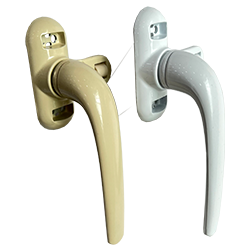
ARTICLE NO.147|Essential Door Hardware: Hinges, Locks, and Handles Explained
Whether you’re equipping a home, a shop, or a commercial building, door hardware is what makes everyday access smooth, secure, and long-lasting. But in real installations, customers often ask about windows at the same time—so the best approach is to understand how door hardware works alongside the matching window parts: window hinges, window friction stay hinges, window handles, friction hinges, and window locks. Below is a practical explanation of the three essentials—hinges, locks, and handles—and how they connect to window performance.
09-06-2026-
Contact us today to start a cooperation conversation! — Guangdong Sihai Hardware Precision Manufacturing Co., Ltd
A Warm Invitation We warmly welcome customers, distributors, architects, contractors, and importers to connect with us. If you are looking for high-quality window friction stay hinges or glass door hardware, we would love to talk—whether it’s for new orders, OEM/ODM cooperation, or project sourcing. Let’s build durable and reliable door/window systems together. Contact us today to start a cooperation conversation! — Guangdong Sihai Hardware Precision Manufacturing Co., Ltd
13-05-2026 -
SIHAI HARDWARE COMPANY Achieves ISO 9001 Certification — Elevating Quality and Reliability in Window Friction Stay Hinges
GuangDong, China — 2025/05— SIHAI HARDWARE COMPANY, a leading manufacturer of window friction stay hinges, is proud to announce that it has been awarded ISO 9001:2015 certification. This certification recognizes the company’s commitment to a robust quality management system, continuous improvement, and customer satisfaction across all aspects of design, production, and delivery
09-04-2026 -
SIHAI HARDWARE MANUFACTORY Achieves Breakthroughs in Stainless Steel Window Hinge Technology and Project Collaborations
China 2025/10/29 – SiHai Hardware, a leading source manufacturer of stainless steel window hinges and related hardware, today announced significant advancements in its product line and a substantial increase in project collaborations during the second half of this year. The company's commitment to innovation and quality has solidified its position as a trusted partner in the construction and fenestration industries.
29-10-2025 -
Staying Ahead of Industry Trends: How SiHai Hardware Manufactory's Partnerships Fostered Adaptation and Innovation
As a leading manufacturer of window hardware accessories, SiHai Hardware Manufactory has consistently demonstrated its ability to stay ahead of industry trends and adapt to changing market conditions. This remarkable feat can be attributed to the company's strategic approach to forging partnerships and collaborations with key industry players.
30-05-2024 -
Propelling Growth through Strategic Partnerships: How SiHai Hardware Manufactory's Collaborations Shaped Its Success
As a leading manufacturer of window hardware accessories, SiHai Hardware Manufactory has established a reputation for innovation and quality. Driven by a passion for excellence, the company has consistently sought to forge strategic partnerships and collaborations that have significantly impacted its growth and market position.
25-05-2024 -
Unveiling Our Success: A Journey of Excellence in the Construction Exhibition Circuit
We are thrilled to share the remarkable success and achievements of our esteemed company as a leading manufacturer of door and window accessories in the construction industry. Over the years, we have actively participated in numerous prestigious construction exhibitions held throughout the country from 2019 to 2024. This article serves as a testament to our commitment and highlights the significant milestones we have accomplished during these exhibitions.
16-05-2024
-
ARTICLE NO.152 | Can a Bent Window Stay Be Straightened? The Honest Answer
Discovering a bent arm on a window friction stay is a moment of frustration. The window no longer closes properly, the sash sits crooked in its frame, or the mechanism binds at a particular point in its travel. The immediate question is whether the bent component can be straightened and returned to service, or whether the entire stay must be replaced. The honest answer depends on understanding what bending does to the metal, where the bend has occurred, and what hidden damage may already exist. In most cases, straightening is a temporary fix at best and a safety risk at worst.
19-06-2026 -
ARTICLE NO.151 | How Dust and Dirt Slowly Kill Your Window Handle's Smooth Operation
The window handle is touched thousands of times over its service life. Each turn of the lever engages a precise sequence of mechanical movements—the spindle rotates, the locking points retract, the sash releases from its seals. When the handle operates smoothly, this sequence is so effortless that users never think about it. When it becomes stiff, gritty, or resistant, the entire experience of using the window deteriorates. The most common cause of this gradual decline is not a manufacturing defect or a material failure. It is the slow, relentless accumulation of dust and dirt inside the mechanism. Understanding how these tiny particles infiltrate, where they settle, and what damage they cause reveals why regular cleaning is not optional for long-term handle performance.
17-06-2026 -
ARTICLE NO.150 | How Many Rivets Does a Good Window Stay Need? Counting the Strong Points
The rivets in a window friction stay are easy to overlook. They are small, unadorned, and look much the same whether they are holding together a premium stainless steel assembly or a budget imitation. Yet the number of rivets, their placement, and their material quality tell a detailed engineering story about how the stay was designed to perform and how long it can be expected to last. Counting rivets is not a matter of more being automatically better, but understanding why each one exists reveals what separates a durable stay from one that will loosen and fail within a few seasons.
15-06-2026 -
ARTICLE NO.149 | How Much Weight Can a Floor Spring Handle? Reading the Size Numbers
A Floor Spring buried beneath a grand hotel entrance may control a door weighing three hundred kilograms. Another unit, identical in appearance but installed under a lightweight office door, manages only a fraction of that mass. The difference lies in the size number stamped on the unit—a code that tells the full engineering story if you know how to read it. Understanding floor spring sizing is not merely a matter of matching numbers. It requires knowing what the size designation actually represents, how door weight relates to door width, and why selecting the wrong size creates problems that go far beyond a door that closes too fast or too slow.
13-06-2026 -
ARTICLE NO.148 | Can You Overtighten a Window Stay? What Happens When You Do
The instinct to tighten something that feels loose is deeply ingrained. When a casement window develops a wobble or fails to hold its position, the natural response is to reach for a screwdriver and tighten every visible fastener on the window friction stay. This approach often seems to work at first—the window feels firmer, the stay holds better—but the apparent fix can set in motion a chain of mechanical consequences that accelerates wear and may ultimately destroy the stay. Overtightening is not just possible; it is one of the most common causes of premature friction stay failure. Understanding what happens when fasteners are torqued beyond their design limits explains why restraint, not force, is the correct approach to window stay maintenance.
11-06-2026 -
ARTICLE NO.147|Essential Door Hardware: Hinges, Locks, and Handles Explained
Whether you’re equipping a home, a shop, or a commercial building, door hardware is what makes everyday access smooth, secure, and long-lasting. But in real installations, customers often ask about windows at the same time—so the best approach is to understand how door hardware works alongside the matching window parts: window hinges, window friction stay hinges, window handles, friction hinges, and window locks. Below is a practical explanation of the three essentials—hinges, locks, and handles—and how they connect to window performance.
09-06-2026